


The Vendor Blind Spot: Why India’s Own ESG Rules Keep Softening Where It Hurts Most
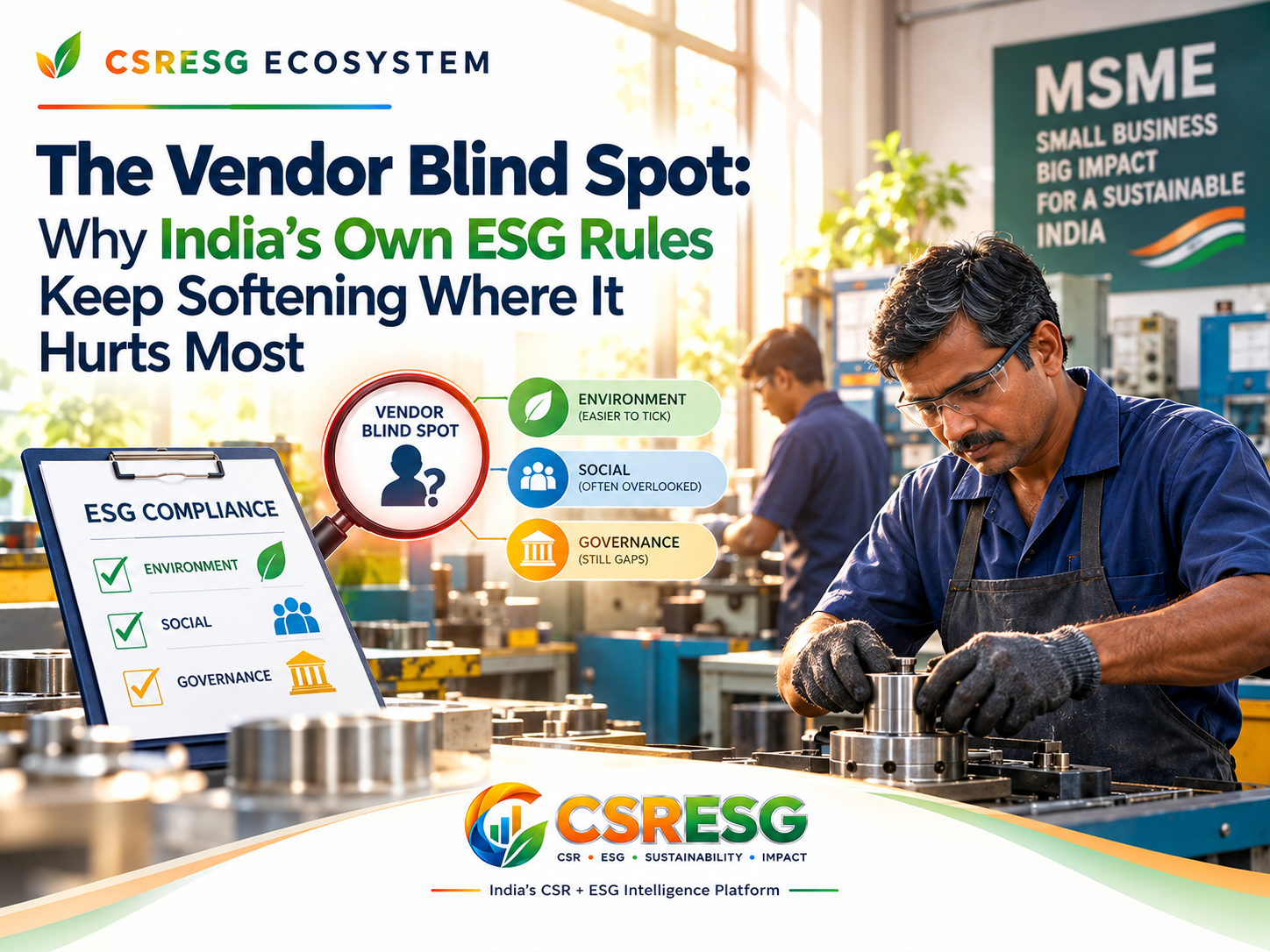
SEBI has deferred mandatory value-chain ESG disclosure twice in under two years. That’s not a regulator losing its nerve, it’s the clearest evidence yet that vendor engagement is the hardest, least-solved part of corporate sustainability, and most companies are quietly relieved someone else blinked first.
The Case For
There’s a real, defensible case for going slow here. Value-chain disclosure asks a listed company to report standardised ESG data Scope 1 and 2 emissions, workforce safety records, water use, for suppliers who, in many cases, are small manufacturers with no finance team, let alone a sustainability one. For a typical mid-cap manufacturer, the value-chain rule covers something like 20 to 40 key vendors. Multiply that across the top 250 listed companies, and you’re effectively asking thousands of MSMEs to build audit-ready ESG reporting infrastructure on a timeline set by someone else’s compliance calendar. Forcing that overnight would have produced box-ticking data nobody trusted arguably worse than no data at all. SEBI’s own recalibration, opening assurance work to a wider pool of professionals beyond traditional auditors, reads as a regulator trying to solve a genuine capacity constraint rather than dodge a hard question.
The Tension
But here’s what the deferral pattern actually reveals: two years after BRSR Core assurance became mandatory for large companies’ own operations, almost nobody has solved the vendor-engagement problem it depends on. Not the regulator, who’s deferred twice. Not the consultancies, who are still selling “readiness” services for a mandate that keeps moving. And, if we’re honest, not most of the companies now publishing polished sustainability reports that name “supply chain engagement” as a strategic pillar while doing very little of it operationally.
This is the exact shape of the gap we’ve been pointing at all year: commitments that are real and audited at the reporting entity, and increasingly thin the moment you move one link down the chain. A voluntary rule doesn’t mean the underlying responsibility became optional, it means the hardest 20% of the sustainability work got quietly pushed to “later,” and later has now happened twice.
Where This Leaves Us
If you lead sustainability, ESG or vendor management at a company inside this mandate’s scope, the deferral is not permission to wait. It’s a two-year head start nobody else is using. The companies that spend this voluntary window actually building vendor engagement not a policy document, but a working relationship with their 20 key suppliers, the kind our Ecosystem Engagement Canvas asks people to name specifically rather than gesture at generally will walk into FY 2026–27’s assurance requirement with real data instead of a scramble. Everyone else will be doing in six months what should have taken two years, at exactly the moment auditors start actually checking.
The Rule went soft. The Expectation didn’t.